
Gemstone Identifier — identify a stone from a photo
Your photo is read once in memory and never stored. Only the written report is kept, and only when you unlock it.
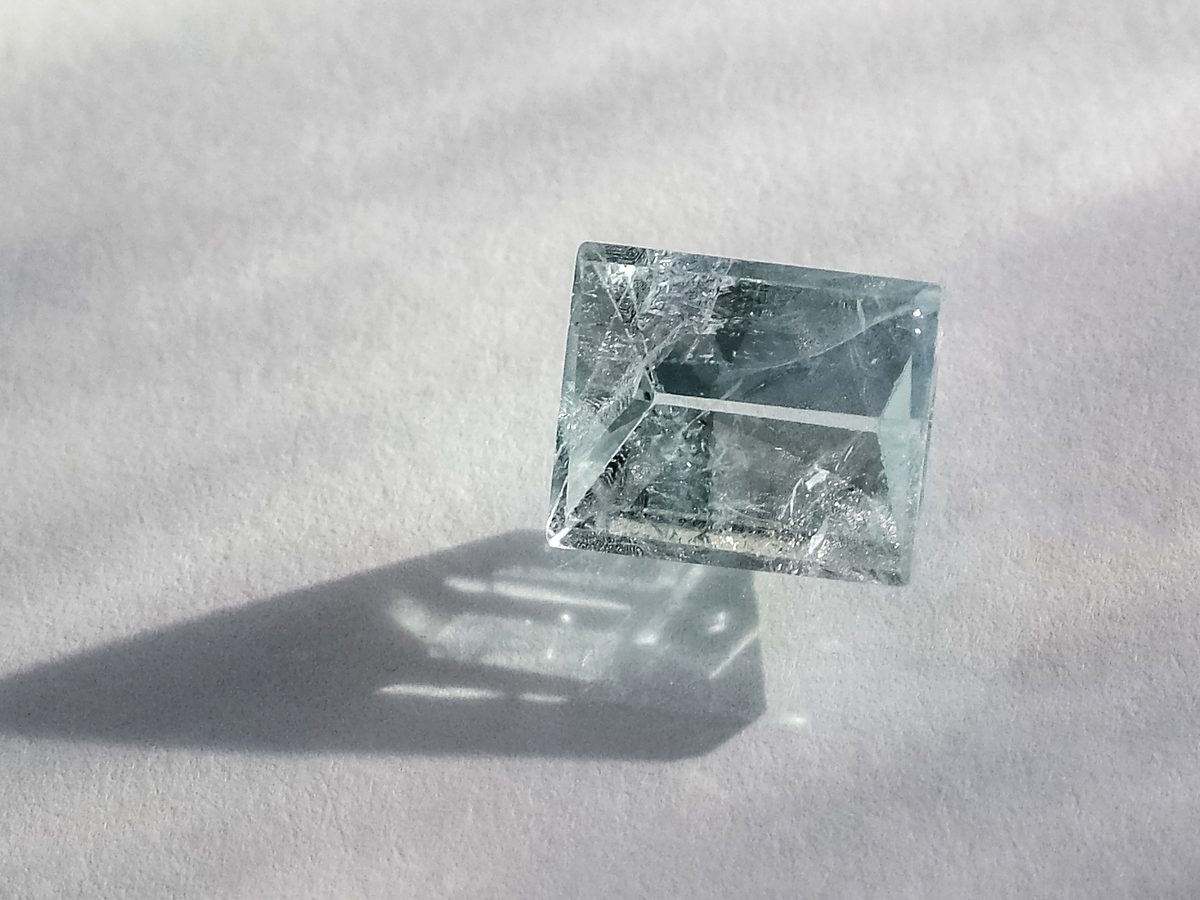
Upload one photo of a stone and read what it shows: colour, transparency, inclusions, cut, luster and breaks, the families it could belong to with a confidence score, what a photograph cannot settle, and what to have measured in person. Free preview of every report
What the report picks out of a photo
Drag the handle. Left is the photo as uploaded, right is what the reading marks in it.
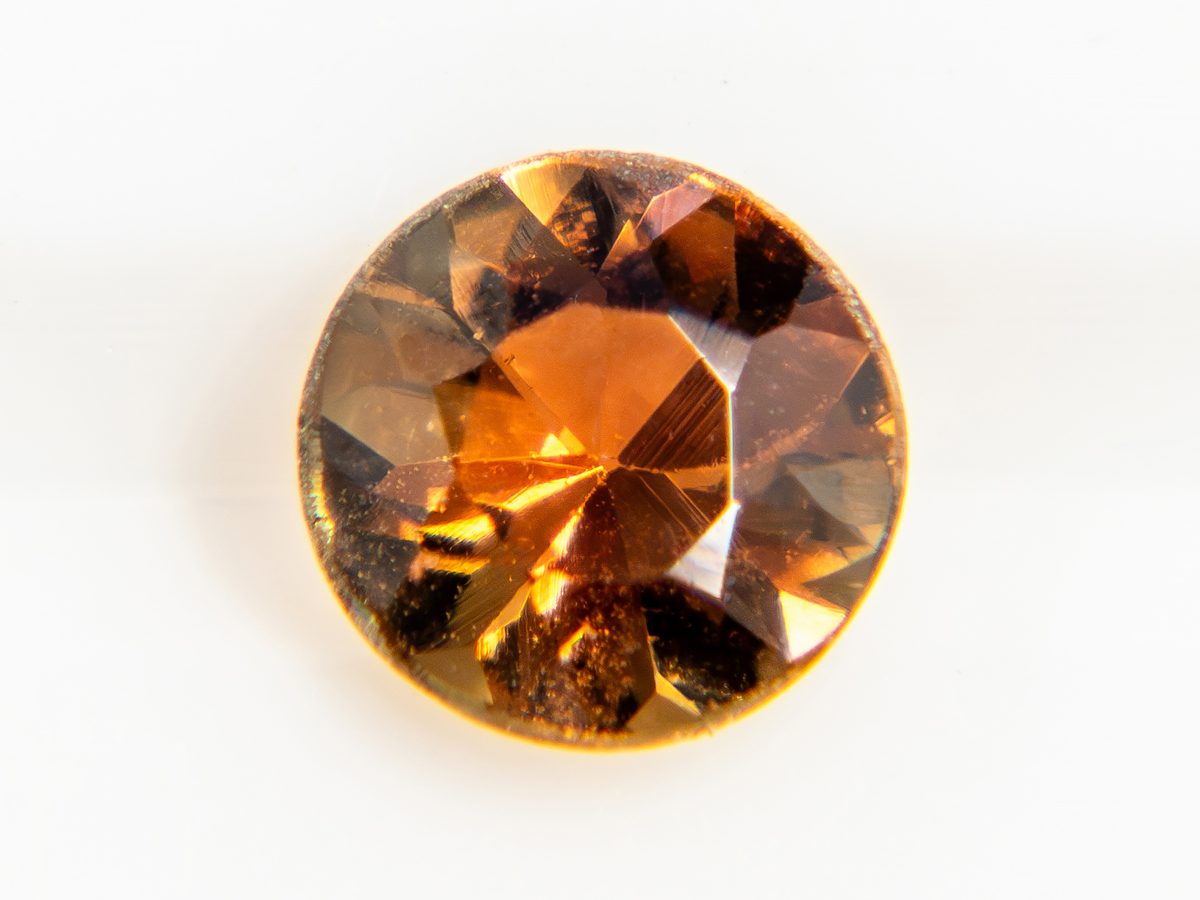
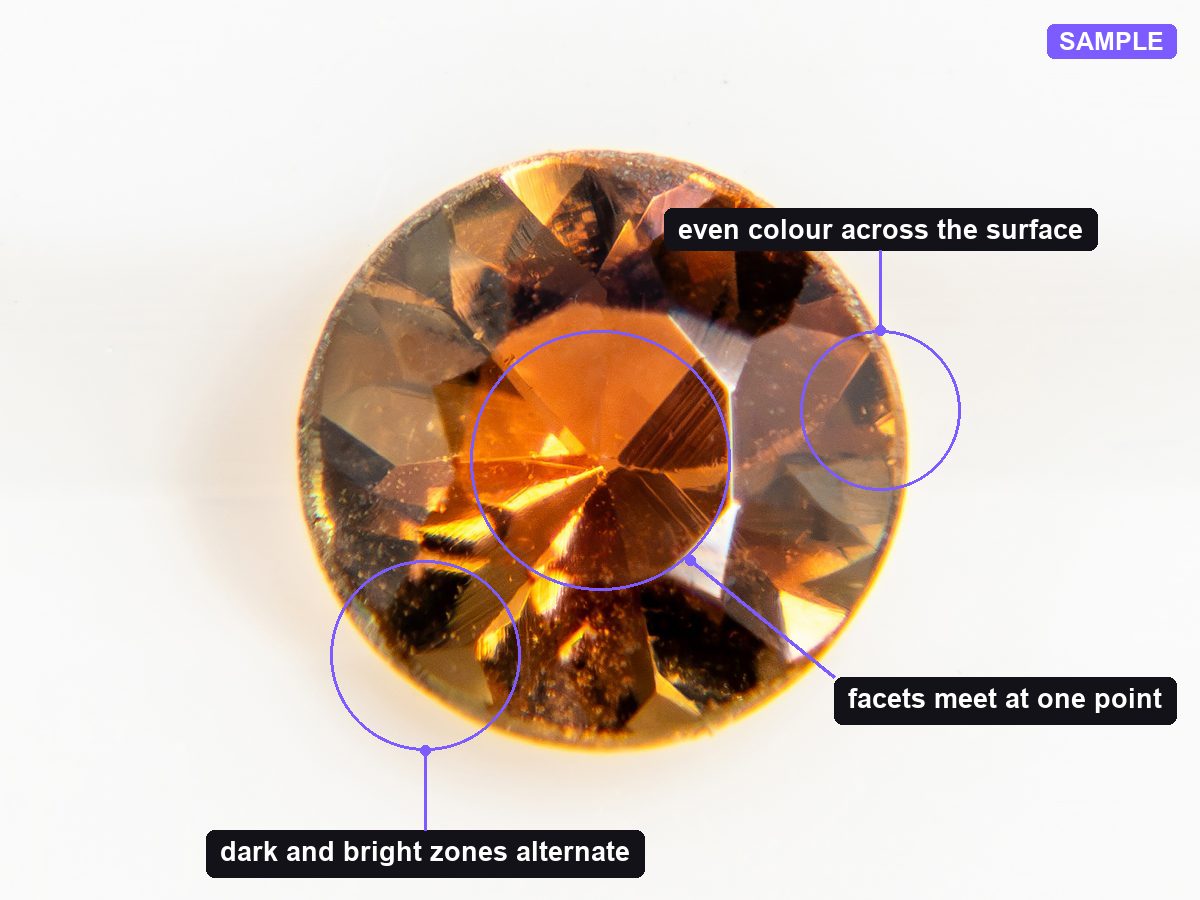 PhotoReport
The clues first, the conclusion second
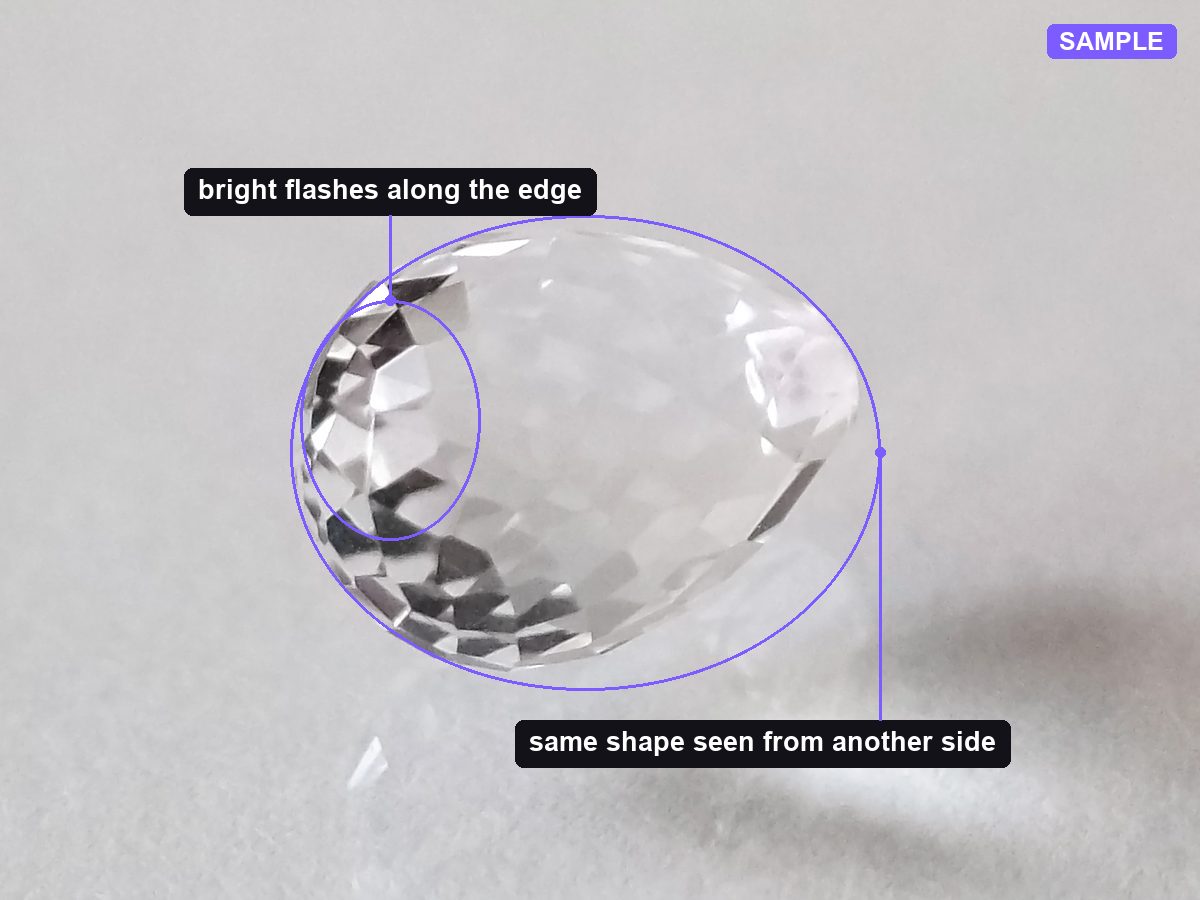
Every report starts with what is actually in the frame: body colour and how evenly it sits, transparency, the internal features the camera resolved, the cut and the state of its facet edges, surface luster, chips and breaks. The possible families come after that evidence, each with a confidence score and the one observation that would change the answer.
It tells you what a photograph cannot settle
A photo carries appearance, not measurements. The report names what is out of reach from a picture — the readings a gemmologist takes with instruments in hand — and lists the non-destructive checks worth doing next. No scratching, no heat, no chemicals: nothing that could damage the stone.
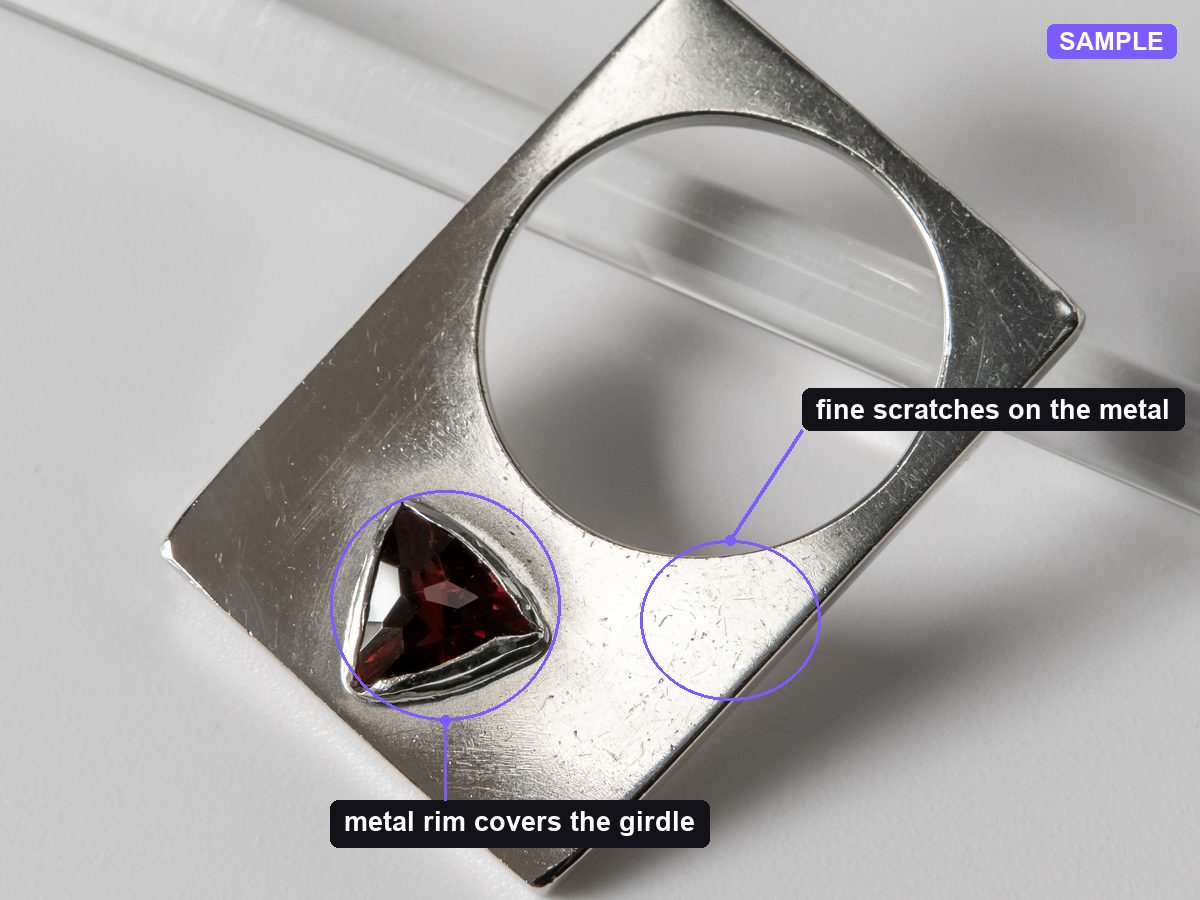
Set stones and hard photographs are read as such
A setting hides the girdle, the pavilion and often the true body colour, and metal reflects into the stone. The report says which clues the setting took away and lowers its own confidence to match, instead of writing the same certainty it would for a loose stone in daylight.
From your photo to the report
- Your photo
- Clues marked
- Small round faceted stone, warm amber body colourFamilies that fit
Colour Warm amber-brown, slightly stronger at the centre Transparency Transparent Cut Round brilliant, even crown facets - Small round faceted stone, warm amber body colourFull report
- What the photograph shows
- Possible identification
- Loose or set, and what that changes
- Imitation indicators, present or absent
Read your stone
Free preview in seconds: the photo-quality verdict, the limits, and the clues. The analysis unlocks on demand.
Your photo is read once in memory and never stored. Only the written report is kept, and only when you unlock it.
Questions
Can a gemstone really be identified from a picture?
A photograph narrows it down. Colour, transparency, cut, luster and visible inclusions rule families in and out, and a careful reading of them gets you to a short list with a confidence score. It does not get you to a single answer: stones that look alike in a photo are separated by measurements — refractive index, specific gravity, spectroscopy — that need the stone in hand. The report is written around that line and says which side of it each statement falls on.
What does the free preview include?
The honest half: how usable your photograph is and what is wrong with it, what this report cannot settle, the caveats on it, and the section describing the visible clues. Unlocking adds the possible identification with its reasoning, the alternatives that were set aside, the loose-or-set context, the imitation indicators and the list of checks to do next.
What makes a good photo of a stone?
Daylight or a single soft lamp, a plain neutral background, no filter, and as close as your camera will still focus. Fill the frame with the stone, keep the whole outline inside it, and wipe the surface first. If the stone is set, take the second angle from the side so the report can see the profile the setting hides.
Can it tell whether my stone is glass?
It reports indicators, not a verdict. Rounded facet junctions, swirl lines, rounded gas bubbles, a soft luster and mould seams are visible in a photograph and the report says which of them are present, which are absent and which the picture cannot show. What settles it is an instrument reading taken in person.
Will it tell me what my stone is worth?
No. This tool does not price stones and does not appraise them, and no part of the report is a valuation. What it can do is describe what is visible and point you to someone qualified to take the measurements a valuation would rest on.
Is this a certificate?
No. It is a written reading of a photograph, produced by software, with a confidence score and its limits stated on its face. A laboratory report is a different thing, made with instruments and a person accountable for the result.
What happens to my photo?
It is held in memory for the single request that reads it and is never written to disk or storage. Only the written report is kept, and only when you unlock it.
Can I send two photos of the same stone?
Yes, and it helps when the first frame leaves something unread — a setting in the way, glare across the table, a colour you cannot trust. Add a second angle after the first reading and both frames are read together. One good photo is still a complete run.